

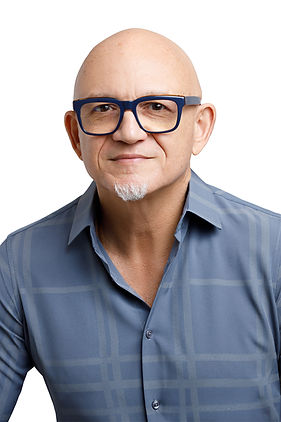
Richard Black
Executive Coach for Senior Leaders.
Helping leaders recognise and shift the patterns pressure creates so they can make clearer calls, build greater ownership, and have more space to lead.
Before those patterns start costing them judgement, trust and performance.
Curious about what's possible for you?
Let's talk!
I work primarily with senior leaders across the Caribbean, and selectively with leaders elsewhere, who have done well, earned trust and taken on bigger roles, only to find that some of the ways they have always led are no longer working quite as well.
Pressure has a lot to do with what happens next.
It can make you carry too much, stay too close to the detail, over-prepare, avoid a difficult conversation or feel that you still have something to prove.
It can also affect the way you work with people. You may step in too quickly, find it harder to trust others with important decisions, or become more guarded when a relationship is under strain.
These patterns can work for a while. But left unchecked, they can make you the bottleneck, weaken ownership around you, strain important relationships and leave too little space for the work only you can do.
My work helps leaders recognise these patterns and change the ones that are getting in the way.
Sometimes that means leaving a decision where it belongs instead of taking it back. Sometimes it means having the conversation you have been putting off. Or recognising that something you have always been good at is now taking up more of your attention than it should.
I bring more than 40 years of leadership experience across oil and gas, software, financial services and organisational transformation. I have led businesses, large teams and regional operations across Europe, Africa and the Caribbean.
At one point, I was leading across 15 countries. I learned that I could not personally carry every issue or make every important decision.
I also learned to ask myself a harder question when something was not working:
What was I contributing to it?
That question still shapes how I work with leaders today.
I understand the pressure from inside the role: making difficult calls without having all the information, working across competing interests and knowing when to step in and when to leave something with someone else.
Coaching gives us a place to look closely at what happens when the pressure rises, where your own response may be making things harder, and what you could do differently before those patterns begin to limit your effectiveness or the performance of the people around you.
The result is not a new leadership formula. It is a clearer sense of what the role needs from you now, what you need to let go of, and where your attention is best spent.